

There’s a special kind of frustration that comes from trying to shift a seized bolt or pry off a frozen component. Whether you’re a farmer knee-deep in a tractor repair or a mechanic working on a stubborn hydraulic fitting, stuck parts are part of the job—but that doesn’t make them any less aggravating.
Let’s dig into why parts seize, how to deal with them efficiently, and which tools and techniques can save you time, skin, and sanity.
Why Parts Seize in the First Place
If you’re dealing with machinery that works in mud, muck, or road salt, you already know the enemies: corrosion, rust, and lack of lubrication. Over time, these elements fuse threads and surfaces together like an unholy alliance of iron and oxygen.
Typical culprits include:
- Nuts and bolts exposed to weather
- Bearings on shafts
- Brake calipers and pins
- Exhaust system fittings
The key to tackling the problem is knowing what you’re up against and having the right approach.
Don’t Force It — Break the Bond First
Wrenching harder on a seized part often results in one of two things: a snapped bolt or shredded knuckles. Neither is ideal.
Start by applying a high-quality penetrating oil, like Sealey Penetrating Oil, to the affected area. Let it sit for at least 15–30 minutes—overnight is even better. The oil seeps into the threads and begins to break down the rust bond.
Pro tip: Light tapping with a hammer helps the penetrant work deeper by creating micro-vibrations that move it along the thread.
Heat: Your Best Friend in a Cold Situation
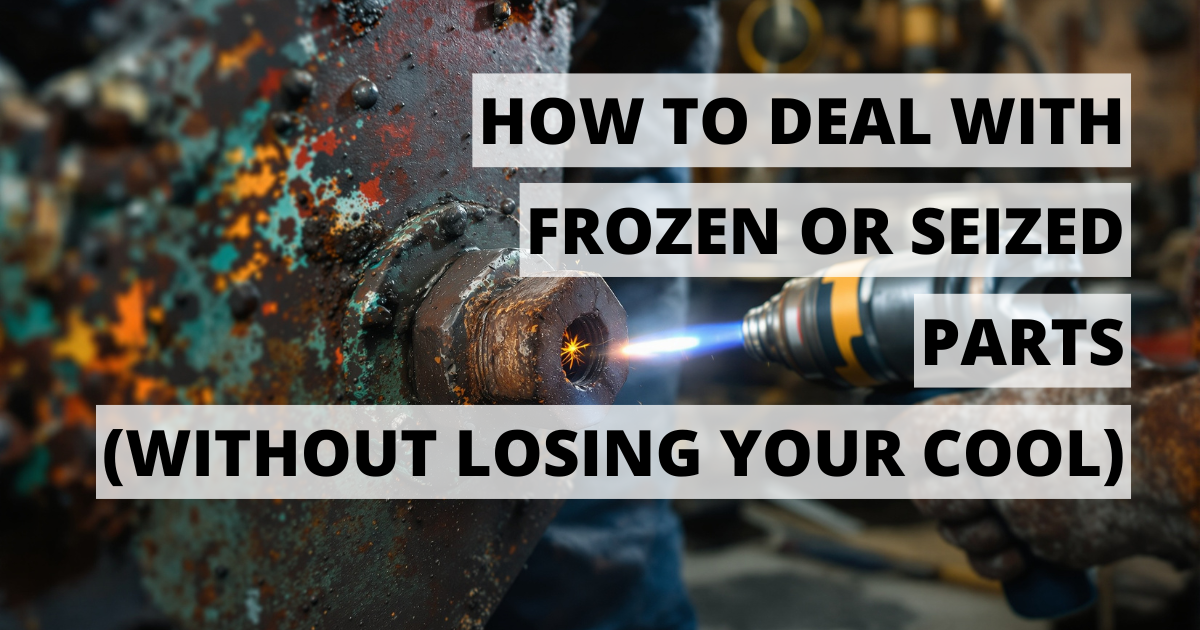
When oil doesn’t do the trick, heat is your next go-to. A blowtorch or induction heater can expand the metal slightly, breaking the rust’s grip.
Here’s how:
- Apply heat evenly around the seized area for 30–60 seconds.
- Allow a short cooling period.
- Try to move the part while the metal is still warm.
This method works wonders on exhaust bolts, rusted axle nuts, and brake parts. Just be cautious around flammable materials—this isn’t the time for shortcuts.
When Heat Fails: Cut, Drill, or Extract
Sometimes, the only way forward is to go backward… with a grinder or drill.
- Cut-off wheels can slice through stubborn bolts cleanly.
- Bolt extractors give you a fighting chance with rounded heads or snapped studs.
- Left-hand drill bits often loosen the bolt as they bite in.
If you’re dealing with heavily corroded equipment, keep a Sealey Impact Bolt Extractor Set in your toolbox. It’s a lifesaver when nothing else works—and it’s built tough enough for ag, plant, and HGV work.
Stay Ahead of the Seize
Once you’ve freed that bolt, take steps to make sure you’re not revisiting the same nightmare later.
- Apply copper grease or anti-seize compound to threads before reassembly.
- Replace badly rusted fasteners with stainless or coated alternatives.
- Use protective caps or covers on exposed fittings.
Maintenance beats mayhem every time.
The Right Tools Make All the Difference
Frozen parts are a test of patience, but having the right gear turns you from stuck to sorted in no time. Multimax Direct stocks a solid range of Sealey professional workshop products designed specifically for this kind of work.
Our top picks:
- Sealey Penetrating Oil – Gets deep into corroded threads fast.
- Sealey 3pc Bolt Extractor Set – For those next-level stuck bolts.
- Sealey Blow Torch Kit – Ideal for controlled heat application.
These aren’t gimmicks—they’re workshop essentials trusted by contractors, farmers, and repair pros across the UK.
Get Back to Turning Wrenches (Not the Air Blue)
Seized parts don’t need to stop the job in its tracks. With the right process and a few quality tools, you can tackle the toughest fasteners and keep your machines moving.
Check out our full range of Sealey workshop essentials at Multimax Direct, and stock up before the next job tries to seize up on you.