

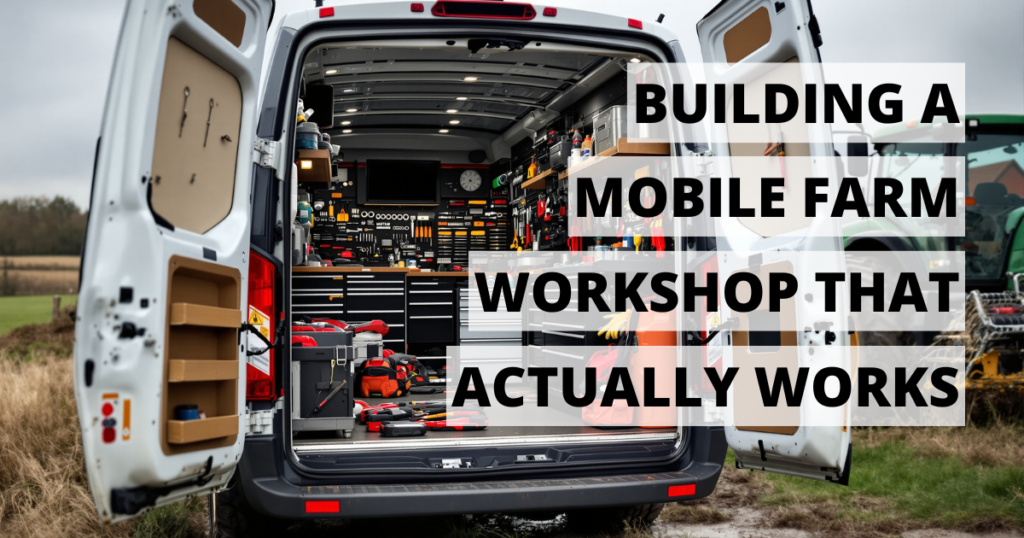
Breakdowns on a farm rarely happen in convenient places.
The tractor does not wait until it is parked beside the workshop before splitting a hose. The telehandler will not politely develop a fault while sitting next to your toolbox. More often, something gives up halfway across a field, down a muddy track or at the exact moment you need it most.
That is why a properly equipped mobile farm workshop can be worth its weight in gold.
Whether you use a van, pickup, service vehicle or dedicated trailer, the goal is simple: carry enough tools and equipment to tackle common repairs without turning your vehicle into a travelling scrapyard.
Here is how to build a mobile farm workshop that actually works.
Start With the Jobs You Actually Do
It is tempting to throw every tool you own into the back of the van. After all, you never know what you might need.
Unfortunately, that approach usually leaves you digging through 200kg of equipment looking for the one 17mm spanner that has somehow disappeared.
Instead, think about the repairs you regularly carry out in the field.
For most agricultural businesses, that might include:
- Hydraulic hose and fitting work
- Electrical fault finding
- Battery and starting problems
- Loose or damaged fasteners
- Tyre and wheel repairs
- Greasing and routine maintenance
- Temporary repairs to brackets, guards and machinery
- Cleaning seized, rusty or dirty components
Build your mobile workshop around those jobs first. You can always add specialist equipment later.
Get the Basic Hand Tools Right
Good hand tools form the backbone of any mobile workshop.
A practical selection of combination spanners, sockets, ratchets, extensions, screwdrivers, pliers, adjustable wrenches and hex keys will handle a surprising number of repairs.
Agricultural machinery also has a habit of using large fasteners, so make sure your socket and spanner selection reflects the equipment you operate.
Do not forget breaker bars either.
When a bolt has spent ten years enjoying a comfortable mixture of mud, fertiliser, water and rust, a standard ratchet may not persuade it to move.
Make Rust and Seized Parts Easier to Deal With
Anyone maintaining agricultural machinery knows that corrosion can turn a five-minute repair into an afternoon of questionable language.
Keeping suitable maintenance chemicals in your mobile setup can save a lot of frustration.
Rustung products are a useful addition here. Products designed to penetrate, lubricate and protect components can help when you encounter seized fasteners, rusty mechanisms and parts exposed to harsh agricultural conditions.
Keeping products such as Rustung penetrating and maintenance solutions alongside wire brushes, cleaning rags and basic consumables means you can attack corrosion before reaching for increasingly large pieces of pipe to extend your breaker bar.
Your knuckles may thank you.
Build a Sensible Electrical Kit
Modern agricultural machinery relies heavily on electrical systems, but even older equipment can suffer from damaged wiring, poor earth connections and tired batteries.
Your mobile farm workshop should include a decent multimeter, test light, wire cutters, crimping tools, terminals, fuses, electrical tape, heat shrink and spare cable.
A portable jump starter can also prove extremely useful.
Keep electrical components in sealed organisers rather than loose boxes. Mud, moisture and electrical connectors rarely make a successful team.
Think About Tyres, Air and Hydraulics
Tyre problems can stop machinery surprisingly quickly.
Depending on the vehicles and equipment you maintain, consider carrying a tyre pressure gauge, inflator, valve tools and suitable repair equipment.
Hydraulic problems deserve similar attention. Spare fittings, blanking plugs, caps and absorbent materials can help you manage leaks and carry out temporary repairs safely.
Just remember that hydraulic systems operate under extremely high pressure. Never use your hands to search for a hydraulic leak, and make sure pressure has been safely released before starting work.
Organisation Matters More Than You Think
A mobile workshop only saves time if you can actually find things.
Use drawer units, toolboxes, labelled organisers and dedicated storage areas. Give commonly used tools an obvious home and return them after every job.
Heavy equipment should sit low and remain securely restrained. You do not want a toolbox, jack or socket set becoming a projectile when you brake sharply.
It also helps to separate clean equipment from oily or dirty tools. A dedicated container for used rags, contaminated gloves and leaking components can keep the rest of the vehicle reasonably civilised.
Don’t Forget Lighting and Power
Breakdowns have an impressive ability to occur just before sunset.
A rechargeable inspection lamp, head torch and portable work light should sit near the top of your mobile workshop shopping list.
If you regularly use power tools, consider how you will keep batteries charged. Spare batteries, vehicle chargers or an appropriate inverter setup can make your mobile workshop far more capable.
Carry Consumables Before You Need Them
Small consumables often make the difference between completing a repair in the field and driving back to the workshop.
Cable ties, split pins, nuts, bolts, washers, hose clips, grease, lubricants, penetrating products, tape, electrical connectors, cleaning products and disposable gloves take up relatively little room.
The trick is replenishing them.
A simple stock checklist can prevent the classic situation where you confidently open the organiser only to discover somebody used the last M8 bolt three weeks ago.
Build Your Mobile Workshop Around Your Business
There is no perfect mobile farm workshop for everyone.
A livestock farmer, agricultural contractor and plant hire engineer will each need a different setup. Start with the repairs you encounter most frequently, organise your tools properly and add equipment as experience highlights gaps.
The result should not be a van packed with every tool imaginable. It should be a practical, organised workshop that helps you get machinery running again quickly.
At Multimax Direct, we supply tools, workshop equipment, maintenance products and Rustung solutions for agricultural, plant and commercial vehicle professionals.